Essential Resources for Maryland Homeowners Facing Financial Detours
Navigating Financial Challenges as a Maryland Homeowner
Maryland’s real estate market presents unique opportunities and challenges. While property values often remain stable, life events such as medical emergencies, job transitions, or unexpected tax burdens can create significant financial detours. Understanding the landscape of support available in the Old Line State is critical for protecting your equity and finding a sustainable path forward.
Featured Snippet: How can Maryland homeowners get immediate financial help?
Maryland homeowners facing financial hardship can access the Maryland Homeowner Assistance Fund (HAF), which provides grants or loans to cover mortgage delinquencies, property taxes, and HOA fees. Additionally, the Maryland HOPE program offers free foreclosure prevention counseling through HUD-approved agencies to help residents secure a fresh start real estate strategy.
State-Level Financial Assistance Programs
The Maryland Department of Housing and Community Development (DHCD) serves as the primary hub for residential stability. Whether you are dealing with a temporary setback or a long-term shift in income, the following programs are designed to provide a safety net.
The Maryland Homeowner Assistance Fund (HAF)
Established through the American Rescue Plan, the HAF program is a cornerstone for those experiencing pandemic-related financial detours. It addresses more than just mortgage payments; it covers property insurance, utility arrears, and even internet service in some cases. Working with a qualified Maryland real estate advisor can help you determine if your specific situation qualifies for these state-level grants.
The HOPE Program (Homeowners Preservation and Equity)
HOPE is a network of nonprofit organizations and government agencies. Their primary goal is foreclosure prevention. They provide a 24/7 hotline (1-877-462-7555) that connects homeowners with counseling services. These counselors act as intermediaries between the homeowner and the mortgage servicer, often facilitating loan modifications that were previously deemed impossible.
Comparison of Maryland Housing Support Systems
| Program Name | Eligibility Focus | Primary Benefit | Application Speed |
|---|---|---|---|
| Maryland HAF | Pandemic-related hardship | Grants for mortgage & taxes | Moderate (6-12 weeks) |
| MD Legal Aid | Low-to-moderate income | Legal defense in court | Varies by case |
| HOPE Counseling | All homeowners in distress | Mediation & loan mods | Immediate (Hotline) |
| Fresh Start Initiatives | Equity-rich, cash-poor owners | Property restructuring | Fast (2-4 weeks) |
Legal Rights and Foreclosure Mediation
Maryland is a judicial foreclosure state, meaning lenders must follow specific legal steps. One of the most powerful tools for a homeowner is Foreclosure Mediation. After a Notice of Intent to Foreclose is filed, homeowners have the right to request a mediation session with an Administrative Law Judge. This is a critical moment to present a fresh start real estate plan, which might include a short sale or a deed-in-lieu of foreclosure.
Relocation Assistance and Transitional Support
Sometimes, the most financially sound decision is to transition to a more affordable living situation. Relocation assistance is not just for renters; many programs help homeowners transition into rentals or smaller homes while preserving what remains of their credit score. This proactive approach prevents the long-term damage of a foreclosure on a credit report, which can last up to seven years.
Strategic Exit with a Maryland Real Estate Advisor
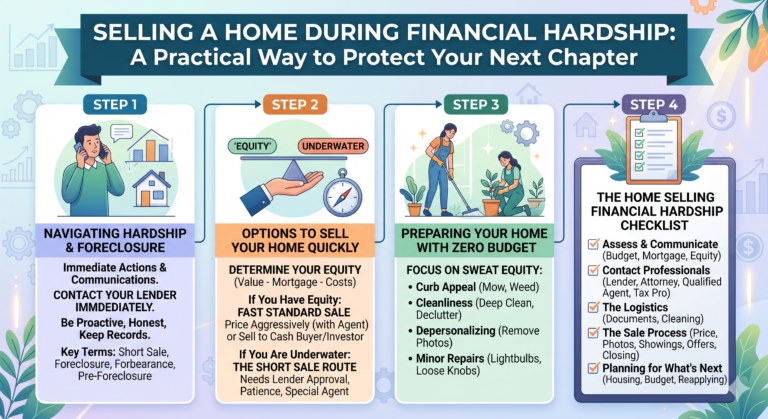
Consulting with an experienced Maryland real estate advisor is essential when traditional loan modifications fail. An advisor can help you analyze the market value of your home versus your debt. If you have equity, a strategic sale may provide the liquidity needed for a new beginning. If you are underwater, they can assist in navigating the complex paperwork required for a successful short sale approval from your lender.
Top Resources Checklist
- Maryland Homeowner Hotline: 1-877-462-7555 (HOPE).
- Maryland Legal Aid: Provides pro-bono legal services for housing disputes.
- Consumer Financial Protection Bureau (CFPB): For reporting unfair lending practices.
- Local Housing Authorities: County-specific grants (e.g., Montgomery, Prince George’s, and Baltimore City).
Frequently Asked Questions (FAQ)
What is the ‘Fresh Start’ real estate approach in Maryland?
The fresh start approach involves a comprehensive evaluation of a homeowner’s financial health, often resulting in a strategic sale, a structured settlement with lenders, or leveraging relocation assistance to move into a sustainable living environment without the weight of past debt.
Can I stop a foreclosure in Maryland once it has started?
Yes, through Maryland’s Foreclosure Mediation process or by filing for Chapter 13 bankruptcy, which triggers an ‘automatic stay.’ However, seeking a Maryland real estate advisor early in the process is highly recommended to explore non-litigious options.
How does relocation assistance work for homeowners?
Relocation assistance often comes in the form of ‘cash for keys’ agreements with lenders or specific state grants designed to help families cover security deposits and first month’s rent in a new property after a voluntary sale or deed-in-lieu.
Are there income limits for the Maryland HAF program?
Yes, the HAF program generally targets households with incomes at or below 150% of the Area Median Income (AMI) or 100% of the Median Income for the United States, whichever is greater.